
Stand Build Regulations
Content
- Accessibility
- Air Conditioning Units "HIGH IMPORTANCE"
- Aisle Carpet
- Build Height Limits
- Ceilings Heights
- Chipboard
- Complex Structure & Fee
- Compressed Gas
- Contractor Insurance
- Demonstrations
- Dismantling of Stands & Exhibits
- Dividing Walls
- Doors - Vision Panels
- Double Deck Stands
- Dust
- Early / Late Working
- Electrics & Service Supply
- Emergency Exits & Gangways
- Enclosed Stands / Walling in Open Sides
- Fire Extinguishers "HIGH IMPORTANCE"
- Fire and Safety Regulations
- Floor Loading Restrictions
- Flooring
- Hazardous Substances
- H&S Documentation
- Hot Works
- Insurance
- Kitchens / Catering
- Labour Law Notice (UAE Government)
- Lifting Equipment
- Live Edge Working Procedures
- Machinery and Heavy Exhibits
- Mains Power Supply (Space Only Stand)
- Maintenance
- Meeting Rooms / Capital Suites
- Organisers Rights to Change Stands and Floorplan Layout
- Personnel Safety Regulations
- Pop-Up Stands
- Ramps
- Hanging & Rigging Banner
- Risk Assessment & Method Statement
- Signage
- Skips and Disposal of Paint & Hazardous Chemicals "HIGH IMPORTANCE"
- Stand Area Limitation
- Stand Information Form
- Stand Capacity & Physical /Social Distancing
- Stand Number Panel
- Stand Walls
- Storage of Materials
- Storage Rooms
- Vehicles Exhibits
- Venue & Local Authority Regulations
- Water, Waste & Compressed Air
- Work Equipment & Tools
- Working at Height
Stand Build Regulations
Below you will find stand build regulations which must be applied to your space only stand design. We have highlighted various general regulations which you may find helpful when designing your stand however please note that this is not a definitive list of regulations. It is the responsibility of the exhibitor and their contractor to ensure their stand design complies with all applicable stand build regulations detailed in the venue technical regulations.
Sustainability
World Future Energy Summit is committed to promoting sustainability in exhibitions and we continually work with venues, suppliers, and contractors to reduce the impact our activities have on the environment. A part of our efforts to move towards reducing our carbon emissions is to educate and inspire exhibitors to make more sustainable choices surrounding the construction of and activities on their stand.
Accessibility
Due consideration must be given to the needs of disabled visitors. It is the exhibitors’ responsibility to remove all barriers to service and make their stand accessible to wheelchair users to comply with The Equality Act.
Where stands have a platform over 30mm / 1.2 inches a ramp should be incorporated into the platform.
If a ramp is not practical or safe, whatever the content of the stand is it needs to be accessible to all. Exhibitors must ensure that compliance measures to the Equality Act are factored into the service they offer at the event and included in their open period Risk Assessment. Examples may include, but are not limited to;
- Displaying products clearly on the perimeter of stand
- Ensuring serving counters have a low access point no higher than 760mm from ground level
- Offering lap trays where required
- Training stand staff understand the needs of the disabled and allow more time to deal with them
- Offering hearing loops
- Having literature in large format print etc.
Air Conditioning Units
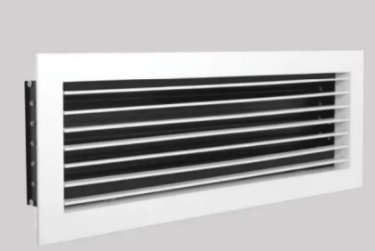
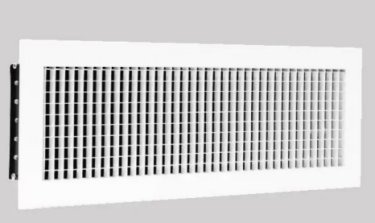
- Stands with A/C units must have louvre ventilation grilles built into walling or doors when in an enclosed space, comprised of aluminium.
- 1 x set of fire extinguishers is required in the immediate location
- These grilles are to ensure suitable exchange of air and to ensure proper ventilation of the units
- Closed rooms without ventilation grilles will not be acceptable, even if they are open at the top
- An exhaust fan and exhaust/ventilation pipe should be available, connected to the A/C unit, which directs upwards to disperse vented air
Example Image :
Build Height Limits
In certain parts of the venue, there are additional build height restrictions. It is the exhibitor's responsibility to check if their stand is affected. Please contact the Operations Team for a detailed stand plot of your location.
Ceiling height in Halls 1 to 9 is 10 meters from floor to bottom of the roof structure.
Please note that there are certain areas within the venue where the ceiling height is less than 10 meters. All stands affected by these height restrictions will be duly informed by the Organiser.
Any construction over 4m is classified as a complex stand so requires structural calculations for structural approval.
Ceilings Heights
Ceiling height in Halls 1 to 11 is 10 meters from floor to bottom of the roof structure. Clear height is 9.5m. ICC Halls ceiling height is 13 meters from floor to bottom of the roof structure. Clear height is 12.5m.
Please note that there are certain areas within the venue where the ceiling height is less than 10 meters.
Gallery height between Atrium and Hall 5 is 4.25 meters high. All stands affected by these height restrictions will be duly informed by the Organizer.
Chipboard
Please note that chipboard, particleboard and low-density fibreboard (LDF) is not suitable for construction and in particular of weight bearing structures. The H&S Manager and Structural Engineer will identify stands which do not comply during the build process and all necessary remedial work must be completed before the stand will be permitted to open.
Complex Structures
A complex structure is any form of construction of any height, which would normally be designed by an engineer and/or has, through a risk assessment, been found to provide significant risk.
Structures over 4 meters in height, double storey stands, raised platforms and certain suspended items are generally considered to be complex structures.
Please note that ADNEC is now Abu Dhabi EHSMS (www.adehsms.ae) compliant and any companies working or operating in Abu Dhabi must comply with the A laws and regulations / codes of practice.
The exhibitor or their appointed contractor must submit Form 7B - Complex Structure Submission along with all the mandatory requirements and information no later than 13th November 2026 and Form 7C - Certificate of Integrity upon completion of the stand 11th January 2027.
- Complex structures including double storey stands may be built up to a height of 6 meters.
- Foundations may not be drilled into the floor and suitable anchorage must be installed.
- Stand designs must receive approval from the structural engineer appointed by the venue prior to commencement of construction.
- Exhibitors must provide proof of suitable insurance to the Organisers before construction can commence.
PLEASE NOTE: PERMISSION TO ENTER THE EXHIBITION PREMISES AND COMMENCE CONSTRUCTION WILL NOT BE PERMITTED WITHOUT THE FULL APPROVAL OF THE ADNEC STRUCTURAL ENGINEER.
Mezzanine Level stand design regulations:
- Maximum height 6 metres
- Mezzanine level stands are NOT permitted on a stand space less than 50 square metres
- Glass panels may not be used for structural strength.
- Maximum travel distance from any part of the stand to the nearest exit should not be more than 10 metres.
- Totally enclosed ceilings are strictly prohibited. Exhibition stand ceilings must not obstruct the sprinklers and shall have an open space of over 50% of the total stand area to ensure fire prevention safety.
- You will need to use 1 metre x 1metre spreader plates underneath each steel column in contact with the venue floor
- Spiral staircases are NOT permitted
- A single staircase shall not exceed 1.8 metres in width.
- Each step forming the staircase must be of uniform dimensions, having a regular rise and tread. The riser and going of each step must be consistent throughout a flight.
- Staircases and landings should have a clear headroom of not less than 2.06m measured vertically from the nosing of the treads or the floor of landings
Handrails
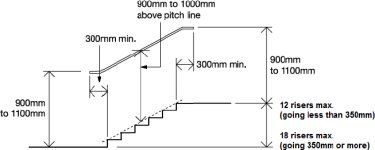
- A continuous handrail must be provided where there are stairs with three or more risers.
- Every flight of stairs must be provided with a handrail on each side. The handrail should be non-climbable and have a solid infill.
- Double width staircases shall have a central handrail.
- The height of a handrail shall be measured vertically from the centre of the steps and landings to its upper surface and shall be a minimum of 900 mm and a maximum of 1 meter. The balustrade should be 1.1 m high minimum.
- Handrails shall be continued as necessary around landings.
- Handrails shall not project more than 100 mm on to the required width of the staircase.
- Additional handrails dividing a flight into channels shall not be less than 1 m wide and not more than 1.8 m wide where the overall width is more than 1.8 m.
- Handrails must extend horizontally beyond the top and bottom of a ramped access, or the top and bottom nosing of a flight or flights of steps, while not projecting into an access route. The ends must be designed to avoid injury to persons ascending and descending the staircase and must terminate in a way that reduces the risk of clothing being caught.
Balustrades/Barriers
- Balustrades or barriers must be provided to protect exposed edges of staircases, landings, balconies, galleries, and other changes of level. They shall:
- Provide guarding to all exposed edges (balustrades), stairs and ramps. The balustrade should be 1.1 high minimum.
- Be non-climbable, i.e., with solid infills or vertical guard rails a maximum of 100 mm apart and without horizontal members between verticals.
- A toe board or solid infill must be installed at the floor level of the storey to a height of 150 mm. This is to prevent any objects from falling or being kicked from the edge of the platform floor.
- Where the balustrade or barrier to the upper deck is formed from full height glazing a horizontal bar (a "bump bar") must be installed to prevent people leaning on the glass. This must be at a height between 1m and 1.2m from the floor of the upper deck and be able withstand a suitable load.
Compressed Gas
All non-mains Flammable Gas including Compressed Gas & LPG (Liquified Petroleum Gases -Propane, Butane, etc) is always prohibited on the premises unless the venue is satisfied that exceptional circumstances apply and its prior consent is obtained. All request related to compressed air supplies must be sourced through the Venue Utility Services as the provision of compressed air is a venue exclusive service. No one is allowed to bring their own machine into the venue.
Contractor Insurance
The Exhibitor shall be solely responsible for ensuring that any contractor, subcontractor, or third party engaged by the Exhibitor to design, construct, install, or dismantle its stand holds and maintains appropriate Public Liability Insurance with a minimum limit of indemnity of not less than £2,000,000 per claim (or such higher amount as the Organiser may reasonably require). The Exhibitor shall provide evidence of such insurance to the Organiser on request and shall ensure that no contractor commences work on site unless and until satisfactory evidence of insurance has been provided.
Demonstrations
Demonstrations on stands during the event must be safe and without risks to health and safety and where necessary covered by a risk assessment.
Dismantling of Stands & Exhibits
The exhibition will close at 17:00 Thursday, 14th January 2027. Exhibitors should not start dismantling their stands and exhibits until the following time.
Dismantling can be started ONLY on Thursday, 14th January 2027 at 18:00hrs till 24:00hrs and starting again from Friday 15th January 2027 at 00:01hrs till 17:00hrs.
All items should be removed within this period. Items or material remaining in the halls after 17:00hrs on Friday 15th January 2027, will be removed at the cost of the Exhibitor.
The Official on-site Freight Handler will bring the empty packing cases into the halls when all the visitors have left the halls.
Exhibitors should pack and secure any small valuable exhibits, remove wall mounted graphics from the standard wood stand walls and empty rented cupboards immediately after the show closes.
DO NOT LEAVE ANY ITEMS IN THE CUPBOARDS OVERNIGHT. All hand carried items should be removed from the halls after closing. The Organizers and the Venue will not be held responsible for any items left in the halls at any time.
Dividing Walls
Where a stand joins another and where the wall is higher than the neighboring wall (no more than 4m), the visible area must be painted in a neutral color to present a neat appearance on the neighbor’s side. Branding and advertising is not permitted on this part of the wall.
On divided sites, space only exhibitors are required to construct freestanding partition walls between their own and adjoining stands. The back wall of a neighboring stand may not be used. You are responsible for erecting and decorating dividing walls facing onto your stand area to a minimum height of 2.3m. Walls above 2.3m must be clad and finished on both sides, with the reverse side being decorated from 2.3m upwards by the Exhibitor who has erected them. Such walls overlooking adjoining stands must be finished in a neutral plain colour only. The minimum height for dividing walls is 2.3m.
The maximum height for dividing walls of single-storey stands is 6m where height limits allow. This is 6m from the venue floor to the top of the wall and not from the top of your platform.
Please note any build height over 4m is deemed a complex structure so structural calculations are required on submission.
Doors - Vision Panels
Where doors are present on your stand they must follow the below guidance;
- The required minimum effective clear width of a door is 800mm.
- Doors must have a vision panel with a zone of visibility spanning from 500mm to 1500mm above the floor. The exception to this is doors to small storerooms, where a small panel may suffice.
- Emergency exit doors must open outwards in the direction of escape.
- Doors must be recessed where they open on to public circulation areas, e.g. they must not open directly on to a gangway.
- Sliding doors are not acceptable as emergency exit doors.
Double Deck Stands
All double deck structures are subject to a pre-show plan approval and onsite inspection by RX's appointed independent structural engineer. Permission to enter the exhibition premises will not be given until permission to commence build from the structural engineers has been issued.
Full regulations for Double Deck stands can be found here.
The deadline to submit your complete stand design is 17:00 (GMT) Thursday 19th November 2026.
Submissions must contain full working drawings, showing all the build elements, in particular:
- Height, width and depth of staircase steps
- Dimensions of staircase landings
- Height and material infils of handrails and balustrades
- Square metre of upper deck area
- Travel distance from the furthest point on the upper deck to a position off the stand
- Glazing details
- Position and orientation of doors
Also required as part of the submission are:
- Structural calculations and drawings to cover all structural elements on the stand deemed as complex
- Visuals
- Risk Assessment, which includes all the activities involved in building a complex stand and clear details of how the risks will be suitably controlled
- Method Statement, which includes details of how the structure will be built and in particular how the risk of working on a live upper deck edge will be suitable minimised/ controlled. It must also identify the person(s) responsible for the supervision and onsite for the duration of the build and dismantling periods
PLEASE NOTE: If the stand plans are not submitted by the deadline of Thursday 19th November 2026 the order will be UPGRADED with the “Double Decker Late fee” and the cost will increase from AED 300 to AED 400 per sqm. The final deadline for Space Only stand submissions is Thursday 19th November 2026. Failure to provide the suitable information by the FINAL deadline date will result in the permission to build a double deck to not be granted.
The Organisers reserve the right to prevent work being carried out by, or on behalf of, any Exhibitor who has not submitted stand design drawings in accordance with these regulations.
Double deck stands will also need to go through the Live Edge Working Procedure during build and dismantling. For further information, please click here.
Dust
There is zero tolerance on dust-creating activities in the halls to avoid additional hazards from coughing and reducing cleaning requirements. All dust must be extracted at source by mechanical means. MDF and chipboard must not be machined on site, as the dust produced is hazardous to health.
Reducing Dust During Stand Builds
Dust causes unpleasant and unhealthy working conditions in the halls. To reduce the levels of dust during the build-up of Arabian Travel Market we have put in place the following regulations which ALL stand contractors must adhere to. Stands will be continually monitored by the Health & Safety Officers and Floor Managers during build up and any contractors found to be violating the regulations will be told to stop working until suitable control measures are put in place.
Issues
- Drilling, cutting, and sawing
- Sanding of walls
Regulations during build up
- Wherever possible stands should be prefabricated offsite/ pre-event.
- MDF and chipboard MUST NOT be machined on site, as the dust produced is hazardous to health.
- If drilling and cutting is causing excessive dust levels these tasks MUST take place outside the venue halls.
- To reduce the need for sanding of large areas of walling we advise contractors to use wallpaper.
- ALL sanding equipment MUST have a dustbag attached.
- If sanding by hand, there MUST be 1 person to do the sanding and another person with a vacuum cleaner which has a long hose to suck the dust particles away as the sanding is taking place.
- If there is an excessive of dust the contractor MUST use dampened cloths to clean the floors surrounding the activities. Dampened cloths help to moisten the surrounding atmosphere and reduce the movement of dust. Please ensure that the floor is not left wet and therefore creating a slippery surface.
- Appropriate face covering/ mask MUST be worn by contractors while sanding is taking place.
Early / Late Working
There will be no early access or late working permitted at the World Future Energy Summit 2027. Any Contractor who wishes to work before and after the official build up/ dismantling hours must apply for an early/ late access pass. Extra charges will apply. For booking and further details, please refer on Form 10 - Early Access Booking Form.
All stand construction and exhibit set up must be completed by 20:00hrs on Monday, 11th January 2027. Failure to meet this deadline may result in a penalty fee.
Electrical Installations & Testing
Mains supply to space only sites is not included and must be ordered through Form 5 - Mains Power, Water & Waste. Please note that orders will not be processed unless fully paid.
Orders received after TBC or placed onsite will be subject to surcharges.
The standard supplies of electrical current available in the exhibition halls are:
- single phase 220 volts 50Hz
- three phase 380 volts 50Hz
All temporary Electrical installations are required to comply with the requirements prescribed in the AD EHSMS Regulatory Framework and the ADNEC Regulatory Codes of Practice RCoP 01 – Temporary Electrical Installations and Mains Supplies (ADNEC-EHSMS-RCoP- 15-01), available upon request from Reed Operations Department.
The Organizers reserve the right to disconnect any installation that, in their opinion, is dangerous or likely to cause annoyance to visitors or other exhibitors.
Three phase supplies and 24-hour connection will be an extra charge. The position of the cable and distribution box should be clearly marked on the grid plan.
All Electrical work will be subjected to inspection and approval before connection to the mains supply. The Organisers reserve the right to disconnect any installation, which, in their opinion, is dangerous or likely to cause annoyance.
Mains supply to Space-Only stands is not included and must be ordered from the Official Electrical Contractor. All Space-Only stands must be individually protected with an earth leakage circuit breaker (ELCB). A separate mains cable will be supplied to each stand, and it is the responsibility of the stand appointed contractor to provide a distribution board, equipped with earth leakage circuit breaker, either the contractor provides it or orders it from the official contractor. (Please note there will be an extra cost for this.) Any electrical related works and wiring installation shall comply with the following:
· Each installation shall be effectively bonded to earth.
· Wiring should be 3 core twin and earth, not less than 1.5mm cross sectional and be in PVC, elastomeric or other plastic sheathing.
· Joints shall not be made except when connecting into a circuit and insulated screwed connectors shall be used and totally enclosed in insulated boxes or enclosures.
· Maintain all plugs and power rating as per BS (British Standard).
· 24 Hour supply rate is = Current Rate + 30%.
· Stand wiring should be neat, clean and safe.
· All wiring shall be effectively protected and fixed to prevent damage and risk of injury. Cables placed under carpets are prohibited unless suitably protected.
· Standby electrician must be assigned during the show to switch-off the electricity in the stand for safety reasons.
Provision of Mains supply. The standard of mains supplies at the exhibition halls are: Single phase main 220 volts 50Hz Three phase main 380 volts 50Hz Costs include fitting, supply, installation, maintenance, and removal at the close of the exhibition. Costs of current consumed are included within the space rental charge. Exhibitors should detail their requirements for mains supply and electrical fittings using the order form and payment in full must accompany the application. Please ensure that you submit the grid form when placing your order, showing required location of services ordered with reference point indicated.
IMPORTANT ELECTRICAL NOTES: Please note that all power supply to the stands will be turned off 15 minutes after the show closes every evening. It is the responsibility of the exhibitor / contractor to account for any electrical requirement during the build-up and dismantling periods within their electrical order.
Emergency Exits & Gangways
Be considerate of others and always keep the aisles around your stand clear. Space Only contractors should not be delivering furniture and stand dressing items until there is sufficient space within the stand area to store them. Items left in the aisles run the risk of being removed either by the Official Logistics Provider or cleaning team which will incur charges that will then be passed directly back to either the stand contractor or exhibitor.
Hence:
- Everyone on site can move more easily around the show floor, for an emergency or any other reason
- The Official Logistics Provider can deliver freight quicker to stands
- Venue rigging department can navigate around the show floor easier so less delays
- Creates more space for your team to work
- Allows venue cleaners to sweep the aisles more regularly which will help to ensure a clean show for your clients on opening morning
Enclosed Stands / Walling in Open Sides
The inclusion of large, enclosed areas within a stand should always be avoided & can only be permitted with the organisers’ prior written permission.
You should consider avoiding enclosed areas on your stand as this restricts air flow.
Any long runs of walling along open sides must conform to the following:
Stands Under 50sqm
Long runs of walling must be avoided particularly along open perimeters of the stand and are restricted to a maximum of 50% of any side of the stand. Solid walling over 50% will not be permitted even if stepped in.
Stands Over 50sqm
Long runs of walling must be avoided particularly along open perimeters of the stand and are restricted to a maximum of 25% of any side of the stand. Wall length can be increased to 50% of any side of the stand if the wall is set back by 1m inside the stand. Where long runs of walling are present along open sides, they must be interspersed with display items etc not left as a plain wall.
Fire Extinguishers
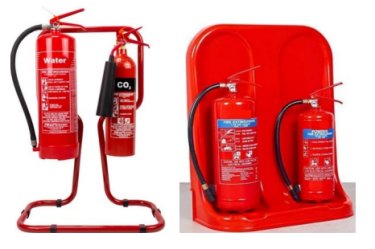
- All Space Only stands to have Fire Extinguishers - 1 x DcP Dry chemical Powder and 1 x CO2) - placed on the stand.
- Fire Extinguishers should be hung on a wall via a purpose-made wall mount or bracket or located on a fire extinguisher stand - not directly on the floor.
- Fire Extinguishers provided by exhibitors or their contractors can be removed at the end of the exhibition period.
- Double Decker stands: 1 Set of fire extinguishers to be placed on each floor or level of the structure - again hung from the wall or on a stand - not directly on the floor.
- Stands with A/C Units: 1 Set of fire extinguishers to be placed in the immediate vicinity of the A/C unit. This requirement is in addition to the fire extinguishers that are to be placed in the general area of the stand.
Example Image :
Fire & Safety Regulations
There are strict rules governing what materials can be used to build stands and these will be covered by the venue’s regulations. Exhibitors and contractors must ensure that they are followed. In general, you are not permitted to build your stand with anything that is flammable or non-flame resistant unless it has been treated.
All stand construction and displays must be made from fireproofed materials and installed to the satisfaction of the authorities.
Any goods attached to your stand will constitute part of your stand and will be subject to these regulations.
Timber Used in Stand Construction & Displays
· All timber under 25mm thick must be impregnated (pressure process) to Class 1 Standard. Treated materials will have BS 476 - PART 7 - CLASS 1 marked on them.
· Boards, plywood, chipboard etc must be treated in the same way if they are under 18mm thick. The exception to this is MDF, which is acceptable for use due to its density. MDF and chipboard must not be machined on site, as the dust produced is hazardous to health.
Plastics / Stand Dressing
· All plastics must conform to BS 476 - PART 7 - CLASS 1. Polucarbonate materials such as Lexan and Macralon are acceptable. PERSPEX MUST NOT BE USED.
· Artificial plants and flowers which are combustible and give off toxic fumes must not be used for stand dressing. Silk type flowers are acceptable providing they have been fireproofed to BS 476 PART 7 and are marked as such. Plastic security night-sheets must also conform to the above standard.
Fabrics Used in Displays
· Drapes, curtains, hangings etc. must be inherently or durably flame-proofed. Otherwise, they may be treated with a proprietary flame retardant. Test certificates must be available for inspection for any materials intended to be used.
· Fabrics used for interior stand decoration must be fixed taut and/or in tight pleats (not loosely draped) to a solid backing, secured above floor level and not touching light fittings.
· Curtains on exit routes should hang 75mm clear of the floor, be parted in the centre and not conceal any exit signs.
Glazing
· All glazing used in the construction of stands must consist of laminated safety glass with a minimum thickness of 6mm. Areas of glazing within 800mm of floor level and over 0.5m2, where the smaller dimension of the pane is greater than 250mm, must conform to the thicknesses shown below:
Nominal Thickness Maximum pane size dimensions
8mm 1100mm x 1100mm
10mm 2250mm x 2250mm
12mm 4500mm x 4500mm
15mm or thicker No limits
Combustible waste must be safely disposed of. Please do not store boxes, packaging, or large amounts of literature on your stand.
Fire patrols will be present throughout all phases of the event. Firefighting equipment is provided in the halls and fire extinguishers of approved pattern and capacity will be provided.
Floor Loading Restrictions
Maximum load in all Halls and external areas is restricted to no greater than 1,000 kg/m2, including duct/trench covers. This is not negotiable. Please ensure the appropriate precautions are made, i.e. 1m x 1m load spreaders must be used, no point load jacking points, and loads are kept off the perimeter shaded areas.
Exhibitors wishing to display vehicles or heavy machinery should send details to the Organizers prior to arrival on-site.
Flooring
Open space sites are not carpeted - exhibitors must provide their own floor covering.
Exhibitors with adjoining blocks of stands will not be permitted to place their own carpet in the gangways unless prior permission is given in writing by the organisers.
Nothing may be structurally attached to the floor of the Exhibition premises.
Carpet may only be fixed to the venue floor with approved carpet tape. All carpet tape must be removed and any charges for the removal of carpet tape left on the floor at the end of dismantling will be passed direct to exhibitors.
During build up there is a significant risk of slips, trips, and falls and sharp objects left on the ground. It is mandatory for all contractors working in the halls in build-up and dismantling to wear appropriate safety footwear.
Hazardous Substances
If you have a hazardous substance on your stand, please confirm the details in writing to the Organisers so that written approval can be given.
Hazardous substances are not brought into the halls unless essential. The use of hazardous substances must be subject to a COSHH assessment. Exhibitors must declare the use or display of hazardous substances as a special risk.

If any hazardous substances are found by our Health & Safety Managers, you will be asked to remove them immediately.
H&S Documentation
As an Exhibitor it is your responsibility to have H&S Documentation in place. Every stand exhibitor and their contractors must ensure that they have identified any risks with working onsite and what control measures they will put in place to protect both their workers and others from coronavirus e.g. cleaning & hygiene, ventilation, staff procedures etc. These measures should be clearly displayed in your H&S Documentation. Every exhibitor is responsible for making sensible adjustments to their space and onsite activities to ensure we maintain a safe environment across the show for everyone who is onsite during build, show open and dismantling.
H&S Documentation should demonstrate that the following have been considered, and appropriate safety measures have been implemented and communicated.
· Ventilation
· Cleaning & hygiene
· Staff procedures and welfare
H&S Documentation should include, but is not limited to:
· A detailed risk assessment for show open, identifying any risks with working onsite and what control measures are put in place to protect both your workers and others. This does not need to be submitted but must be available if requested.
· A risk assessment for build and dismantling (only required from space only stands, or shell scheme stands who are building within their stand – submit via BLG)
· Any other documents you, or your contractors deem necessary e.g. Contingency Plan, Travel policies etc. We do not need copies of these documents submitted.
Hot Works
All welding, gas burning, brazing, grinding and other operations generating heat and sparks are not allowed to be carried out inside the halls. No such activity will be permitted within ADNEC premises without securing a Hot Work Permit from the venue. For further information on this process, please contact the Organizers.
Insurance
Exhibitors and Contractors are fully responsible for obtaining insurance protection for all their exhibits, property, and personnel. The policy should be against all risks and the cover period should include the transit and the entire period when on-site.
Insurance cover should include:
- Personal injury.
- Third party claims.
- Expenses incurred and/or losses of any kind, including losses resulting from the abandonment or the postponement of the exhibition.
- Medical expenses and baggage cover.
- Value of the stand including the fittings.
Kitchens / Catering
At this time exhibitors should only provide packaged food. This is available from the official catering provider and can be delivered to stands. As a result cooking on stands and food preparation is not required and therefore kitchens are not permitted.
Abu Dhabi National Exhibition Centre has sole catering rights for food and beverage services within the venue. All food and beverage items consumed in the halls should be supplied by ADNEC appointed outlets only.
Food outlets serving light refreshments and snacks are located along the exhibition concourse areas while more options can be found in ADNEC Grandstand Food Court.
Exhibitors requiring stand catering should complete and return the Form 14 - Stand Catering.
The use of external caterers is not permitted within the venue. However if a 3rd party caterer is bought on site to provide catering a corkage fee will be charged by ADNEC and will need to be paid before service can begin or continue – this is calculated by the catering manager. Please contact Capital Catering at +971 2 406 3777 or email sales@capitalcatering.ae
However, if a 3rd party caterer is brought on site to provide catering a corkage fee will be charged by ADNEC and will need to be paid before service can begin or continue – this is calculated by the catering manager.
Labour Law Notice (UAE Government)
As per UAE law, it is the responsibility of the exhibitor/contractor to ensure that all personnel working onsite, during build-up / show days and dismantling carry their relevant documentation, as proof of position in your company.
UAE labor law prohibits the hire or contract of any illegal laborers. Violation of this law may result in a jail sentence or up to AED 10,000/- + fine. It is essential that all laborers employed either by exhibitors, contractors or sub-contractors are made aware of this law. ADNEC’s surveillance section will be always present to ensure that those working onsite and within the halls comply with the employment laws of the UAE.
- All contractors must bring their Emirates ID card together with a photocopy of their UAE visa showing their sponsor’s name. Only a valid Emirates ID card together with a copy of the visa will permit access into ADNEC.
- Any other cards will NOT permit access (driving license, medical card, etc.)
- International guests will be required to supply a copy of their temporary visa and passport
- Please ensure that all relevant contractors are made aware of this fact to avoid delays and disappointment.
Sub-contracting
Any contractors who hire subcontractors must have an official agreement in writing between the two parties. An official “Subcontract Agreement” form (available in any UAE book shop) showing company stamp from both parties must be used in order to be accepted by ADNEC access control areas.
All laborers must provide a valid Emirates ID card and visa copy that endorses their employment with either the contractor and or sub-contractor to gain access to the halls.
Lifting Equipment (Including Forklifts)
DSV is the official goods & freight handling contractor and ADNEC Services the official rigging contractor are the only contractors permitted to operate lifting equipment and forklift trucks within the Exhibition Centre. Stand build contractors and exhibitors will not be permitted to operate any lifting equipment under any circumstances.
Live Edge Working Procedure
A Live Edge Working Procedure will be enforced for the construction and dismantling phases where applicable. Live Edge Working will be permitted onsite by the Safety Officer once the control measures described in the risk assessment and method statement and been verified with the construction team when they arrive onsite. Work will be stopped if the construction team are working without permission or if the construction team are found working unsafely and not following the procedures identified in the risk assessment and method statement. Any additional working hours required to make up lost time will be charged at the exhibitors / contractors own expense.
Click HERE for the Live Edge Working Policy.
Machinery and Heavy Exhibits
Full specifications of large exhibits and machines to be displayed including the weight and dimensions should be sent to the Organisers prior to going on-site and a plan showing the exhibits location on the stand.
Large exhibits requiring a forklift should be delivered to the halls early on the first day of build-up.
Maintenance
The maintenance works of all exhibits must be undertaken outside the exhibition hours.
Exhibitors who wish to perform maintenance works on their stands should submit Form 27 - Maintenance of Exhibits to the onsite Organizer’s office before 14:00 hrs. on the same day for authorization.
The use of trolleys and the movement of exhibits during exhibition opening hours are strictly forbidden.
Meeting Rooms / Capital Suites
Meeting rooms / Capital Suites located on ADNEC Mezzanine level are subject to availability, please contact paulabianca.pisase@rxglobal.com
Organisers' Right to Change Stands and Floor Plan Layout
In the interests of the exhibition as a whole, it may be necessary to remove or alter anything in - or forming part of - any stand. If we feel this action must be taken this would have to be at the expense of the exhibitor concerned.
The exhibition floor plan is subject to change at the discretion of the Organizers. Please contact the Organizers to obtain the latest version of the exhibition floor plan.
Personnel Safety Regulations
Contractors using climbing boom lifts, gantries and mobile scaffold platforms must be wearing appropriate safety harnesses and helmets.
The following are Health and Safety mandatory requirements at the ADNEC during build up, dismantling and any other construction areas or loading bays.
Mandatory Foot Protection
- It is now mandatory to wear SAFETY Footwear (Safety shoes with toe and puncture protection) to work in the halls and loading bays during build up and dismantling periods.
Mandatory Head Protection (Hard Hat)
- It is mandatory to wear a hard-hat if you are working on or around any double decker stands, scaffolding, or any structure where there is a risk of falling objects or head injury. As we as in the loading bay when offloading or loading a vehicle.
Mandatory High Visibility Clothing (High Visibility Vest)
- It is now a mandatory requirement to wear high visibility jackets/vests (any color) in the halls during build-up and dismantling, and at ALL TIMES in the loading bays or areas where there is movement of vehicles.
- High visibility jackets/vests will not be provided by the organizer, therefore, Exhibitors are kindly requested to bring their own upon accessing the halls during build- up and dismantling period.
Please contact your contractor’s supervisor or manager to consult with HSE team to order your PPE. Alternatively, for emergency purposes or unexpected visitor access, you can purchase the above PPE from the grocery in grandstand.
Pop-Up Stands
Pop-up stands may not be used to form dividing walls on space only sites. If you are considering a Pop-up stand display, a Shell Scheme Stand must be purchased or dividing walls constructed.
Ramps
Where stands have a platform over 30mm a ramp should be incorporated into the platform within the stand area.
Ramps must:
· Have a clear, unobstructed width of 1.5m
· Be clearly signposted or readily apparent
· Not have a gradient steeper than 1:12
· Not be greater than 10m long, or have a rise of more than 500mm
· Have a landing at least 1.2m long at the top
Please refer to 'Ramped Access' section of the Gguide for further information
Rigging
All rigging within ADNEC must be carried out by ADNEC Services - Rigging. Exhibitors wishing to rig banners/hanging signs or lighting above their stands must complete Form 12 - Hanging & Rigging Banner. Adequate drawings showing the design, dimensions and location of the suspended item must be attached to this order to ensure that the order is suitable for the item which requires rigging.
All rigging must be an integral part of the stand design and should be confined within the limits of your stand area. Please note that banners and hanging signs must not project on to the aisles or a neighboring stand and they must be within the perimeter of your stand.
All stand fitting equipment must be supported from the ground. Stand fitting is not permitted to be rigged from the ceiling under any circumstances.
Complex Rigging
Complex Rigging or Suspended Loads/Structures refer to rigged, custom-built/bespoke structures including items that have been constructed from non-modular materials, e.g. wooden structures and exhibits.
All rigging activities at the venue must have an approval from Venue Rigging Department. An onsite complex rigging sign-off is required for all stands with custom-built or bespoke suspended structures. Onsite, all complex rigging or ‘suspended loads’ must be inspected and subject to approval by the Venue Rigging Department before being hoisted or connected to any rigging points. It is the stand contractor’s responsibility to inform the onsite Health & Safety team when they are ready for the structure to be inspected. Any steel wires, shackles, web slings, chains, or lifting appliances are classed as rigging accessories or considered as secondary points and must be inspected by the Venue Infrastructure team. The venue reserves the right to inspect all secondary rigging at the venues and may refuse the use of any rigging that is not certified and does not conform to internationally accepted standards.
All complex rigging must follow the following guidance:
· Bolts must be used on all joints and connections. Screws are not acceptable for joining members together.
· Rated, closed lifting eyes only are to be used; they must be integrated into the design and suitably bolted through the structure.
· Lifting points should be clearly identified and be suitable for the lifting operation.
· Materials used in construction must be of a suitable nature and quality for their intended use. See ‘Fire Safety Regulations’
If any rigged structures are higher than your dividing back walls the following must also be adhered to:
· Structures with no branding facing the dividing wall must be stepped in at least 0.5m from the dividing wall.
· Structure with branding facing the dividing wall must be stepped in at least 1m from the dividing wall.
The points below will be checked:
· Conformity of the installation with the specifications in the manufacturer's technical notice and in compliance with the load charts and any calculation notes, light bridges installed in the proper direction, inspection of installation of rigging clips, etc.
· Use of hoisting equipment that have been duly checked (periodic inspection according to the standards in force) and that are of equal and synchronous power
· Compliance with the technical specifications established by the event organiser
· Compliance with the specifications indicated on the plan provided and compliance with the site's technical specifications.
· Use and implementation of hoisting accessories (cables, slings, shackles, links...) in compliance with the standards in force.
· Compliance of the rigging points on the suspended structures with the standards in force in coherence with the loads to be supported.
· Installation of safety slings in a taut position, particularly for electric hoists
· Double securing of technical elements installed on the lighting truss or the suspended structure, e.g. spotlights, screens, speakers, signage elements etc.
Risk Assessment & Method Statement
All space only stands, or shell scheme stands with construction are required to submit a full risk assessment and method statement for the design, construction and arrangement of their stand with both documents being submitted along with stand plans.
For further information please contact the Operations Team.
Exhibitiors are also required to have a risk assessment for any stand activities taking place on their stand during show open and may also be required to produce a method statement for certain activites at the organisers discretion. These do not need to be submitted to the organisers unless requested, but a copy of these documents must be available onsite should they be required.
Signage
Signage and graphics are not permitted to overlook other stands where there is a dividing wall. Where illuminated fascia boards are used on stands, the lighting of them must be of sufficient power to light the fascia board only, and must not cause any spill of light onto neighbouring stands. No flashing lights will be permitted. We reserve the right to disconnect the electrical supply to any illuminated fascia which, in our opinion, is causing a nuisance to any other Exhibitor.
Signage should be used to help communicate and explain to attendees how you are managing your stand space e.g. no handshakes, one-way flow, entrance / exit etc.
If any rigged structures are higher than your dividing back walls the following must also be adhered to:
· Structures with no branding facing the dividing wall must be stepped in at least 0.5m from the dividing wall.
· Structure with branding facing the dividing wall must be stepped in at least 1m from the dividing wall.
Skips and Disposal of Paint & Hazardous Chemicals "HIGH IMPORTANCE"
SKIPS
- Only skips sourced, ordered, and supplied by ADNEC can be used onsite.
- This includes general waste & construction skips.
- Should anyone have any questions or queries with regards to this, please seek the advice and input of ADNEC’s Environment and Cleaning team.
DISPOSAL OF PAINTS AND HAZARDOUS CHEMICALS
- As per a directive from TADWEER, all exhibitors and contractors must follow the rules and regulations concerning the correct and legal removal and disposal of paints or other hazardous chemicals from ADNEC site. This is applicable at any time during build-up, show open and dismantling periods of the exhibition.
- Should the Environment and Cleaning team identify tins or containers of paints or other hazardous chemicals during their regular waste removal work, a PENALTY fee of AED 300 per ITEM will be charged accordingly to the Exhibitor/Contractor. Extra fees applies if inspection is needed to identify which contractor left these items. ADNEC will then arrange for the safe and correct disposal of the item/s as per TADWEER’s rules and regulations.
- In all cases, Exhibitors and their Contractors are solely responsible for monitoring and managing the activities taking place on their stands. This includes ensuring that paints or other chemicals were accounted for and removed in the approved and correct manner.
Stand Area Limitation
The walkways around stand areas are not display space and must not be used for the display of signage and wares as it will prevent reasonable access for visitors and staff and may constitute a hazard under emergency conditions.
Stand construction extending through the aisles is strictly prohibited. No features of the stand should encroach beyond the rented space area.
Stand Information Form
The Stand Information Form is a compulsory form that must be completed on or before 18 December 2026.
To complete the WFES Stand Information Form, please click HERE.
Stand Number Panel
A stand number panel must be displayed on every open side of the stand to aid visitor navigation. This is the responsibility of the Stand Space/Exhibitors.
Stand Walls
Perimeter hard walls must be avoided and is restricted to a maximum length of 4m of any side of the stand and a natural break of 1.8m wide. – Below recommendation:
Perimeter Hard walls must be avoided and is restricted to a maximum of 30% closed for anyone of the perimeter sides. These walls must be recessed by 0.5metre and must not be left plain.
For stands of over 50sqm, wall length of the stands can be extended up to 50% of any side but should have a 1m set back from the edge of the stand.
Stand walls must be no higher than 4 meters. Stands with walls over 4mH are considered are considered “Complex Structure”
Where a stand joins another and where the wall is higher than the neighboring wall (no more than 4m), the visible area must be painted in a neutral color to present a neat appearance on the neighbor’s side. Branding and advertising is not permitted on this part of the wall.
On divided sites, space only exhibitors are required to construct freestanding partition walls between their own and adjoining stands. The back wall of a neighboring stand may not be used.
Storage of Materials
Excess stock, literature and packing cases may not be stored on, around or behind stands, unless contained within a lockable storeroom (the doors to which must have a vision panel).
The rears of the stands are designated utility areas and do not form part of the exhibition or sold space. In accordance with ADNEC- EHSMS-RCoP a 1.5m wide unobstructed utilities access route shall be maintained to the front and rear face perimeter walls of the exhibition halls.
Direct arrangements for storage of empties and show consumables should be made with the Official Freight Forwarder. Otherwise, Exhibitors must arrange for their cartons and cases to be transported back to their own premises.
Organizers reserves the right to remove/dispose of any cartons, cases and / or packing material left in the exhibition Halls / behind stands. Any cost incurred will be borne by the Exhibitor.
Storage Rooms
No excess stock, literature or packing cases may be stored around or behind your stand. Where possible storage should be factored into your stand design or arranged with our official lifting contractor.
Vehicle Exhibits
Exhibitors wishing to display vehicles should complete and submit Form 8 – Vehicle Display and Arrival Schedule to the Organizers not later than 8th December 2026. The Full specifications of the vehicles including weight and dimensions should be forwarded to the Organizers.
All vehicles and other exhibits must comply with the following, prior to being left unattended on the stand;
- The vehicle must be static and have its engine switched off for the duration of the event.
- Contain only a minimum amount of fuel.
- Have a lockable fuel cap.
- Have a drip tray placed under the engine.
- Battery to be disconnected where the Vehicle is NOT driven by Battery power
- Keys to be left with organizers in case removal is required.
- 24hr Contact Name and Number to be given to organizers.
- Organizers and the Venue accept no responsibility for any vehicle that is damaged when being bought into or out of the Hall or once in its final position.
- Organizers and the venue will also not clean any such vehicle. This is the responsibility of the exhibitor.
- Any damage caused to the venue because of vehicle movement will be charged against the security deposit.
Exhibitors must work closely with the Organizers when arranging to bring the vehicle into the exhibition, often it may be required to enter the halls before the build due to the logistics of building the exhibition around the vehicle.
Venue & Local Authority Regulations
All work must be carried out in compliance with the regulations of the Venue and Local Authority. If an exhibitor erects a stand which does not conform fully and in all respects to the requirements of the organiser, Venue and Local Authorities, the organisers reserve the right to alter, demolish or reconstruct the stand at the exhibitors expense and to make it conform to the regulations and requirements. Local Authority decisions are final.
Water, Waste & Compressed Air
Exhibitors should contact the Organizers to check the nearest location for water and waste supply. See Form 5 - Mains Power, Water & Waste to order.
Exhibitors may not have generators or compressed air units on their stands. If compressed air is required, please inform the Organizer to arrange it with the venue at a cost.
Work Equipment & Tools
Exhibitors and contractors have duties under the Provision and Use of Work Equipment Regulations (PUWER) to ensure that all tools are fit for purpose and safe to use. All dangerous moving parts such as circular saws must be guarded with controls to prevent unauthorised use. The use of battery powered tools is strongly encouraged to reduce trailing cables and risk of electrical hazards. Power tools are to take power from the 110v centre tapped earths provided and not from cleaner’s sockets which are 240v. Those using mains powered tools must ensure that cables are not trailed across aisles. All portable electrical equipment must be subject to a suitable portable equipment testing regime.
Working at Height
Working at Height is a high risk activity and close attention will be taken on working practices during the build and dismantling of stands. Where possible working at height should be avoided and if unavoidable should use work equipment or other measures to minimise the distance and consequences of a fall should one occur. Working at height is to be in accordance with LOLER and the Working at Heights Regulations. As such, all working at height is subject to risk assessment.
General Guidance:
- All rigging is to be carried out by the official Rigging Contractor.
- All working platforms are to have a guardrail, mid rail and toe board. Tools are to be kept on lanyards so far as is reasonably practicable.
- Static and mobile access working platforms must be fit for purpose (see Working Platforms)
- A Live Edge Working Policy will be enforced for the construction and dismantling phases where live edges are present.
- Separate risk assessments are required for working on a live edge (before rails are in place). In such cases fall arrest equipment must always be used.
- Operatives working at height other than on a static working platform designed for that purpose (e.g. Scaffold) must be clipped on.
- Operatives working at height must have suitable head protection e.g. bump caps.
- Ground access to areas in the vicinity must be controlled to prevent persons accidentally walking directly under high works. Ground workers in the vicinity must not work directly under high works and wear suitable head protection e.g. hard hats.
For further advice on working at height safety, please contact the Operations Team.